
How to Design a Viral Thumbnail – Rules Behind Every Successful YouTube Video
Most YouTubers treat the thumbnail as the last step. The video's done, the upload deadline is close, so text goes on a screenshot and the thing gets published.
That order is wrong. Two metrics decide whether a video takes off: click-through rate and how long people actually watch. Watch time only exists after the click. The thumbnail controls the click, which puts it upstream of everything else on your channel. Hours of filming and editing ride on an image the viewer looks at for about a quarter of a second.
Here's the process we follow when designing thumbnails for client channels.
Start with psychology
A quarter of a second. That's roughly how long a scrolling viewer gives your thumbnail before moving on. To stop them in that window, you need one of two things: curiosity or emotion.
Think of walking past a cafe and catching one sentence of a stranger's conversation, and suddenly you're looking for a reason to sit down nearby. That's the effect a good thumbnail creates. Something in it makes the viewer need the rest of the story.
The most common ways to plant that question:
Challenging Common Beliefs & Contrary Statements
Curiosity is often sparked by a twist, something that contradicts what people already believe to be true. When a thumbnail challenges a widely held assumption, it creates friction and disbelief in the viewer's mind. They can't scroll past because they need to know if you're right. Statements that flip conventional wisdom on its head force the viewer to click just to resolve that internal tension. The stronger the contradiction, the harder it is to ignore.

Source: @taekwondofury

Source: @SheffieldMadePlants

Source: @danmartell
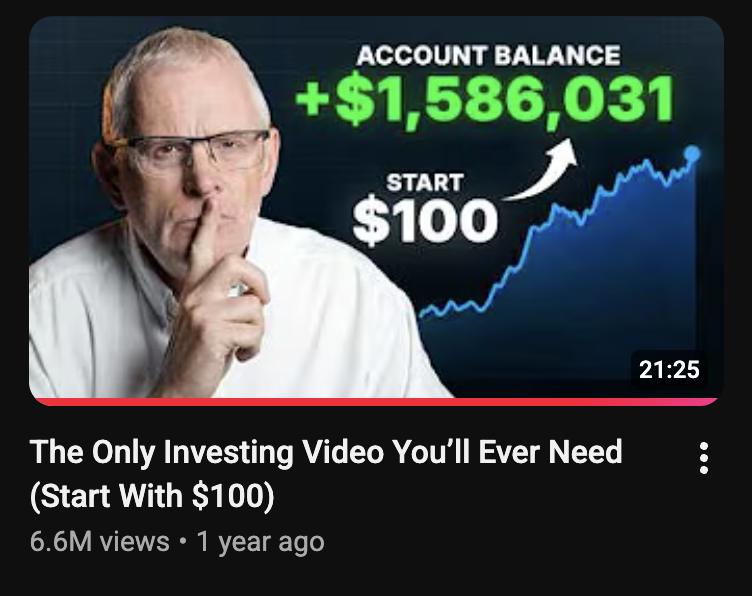
Specific Numbers, Timelines & Stats
Oddly specific numbers do something that round figures simply can’t: they feel real. It tells the viewer that you're not making a vague promise. You have actual data, a real result, a precise story. That precision triggers curiosity in a way that generic claims never will.

Source: @FabioMorenaa

Source: @KennyFinanceYT
Source: @marktilbury
Open Loop
The open loop is one of the most powerful psychological mechanisms in thumbnails. The thumbnail introduces a concept, the title confirms it's real, but neither one completes the thought. The viewer's brain is wired to demand closure, and when it doesn't get it, the only way to satisfy that itch is to click. You're essentially starting a sentence and leaving it unfinished. The viewer has no choice but to watch the video to get the ending.

Source: @harryjaggardtravel

Source: @MaxFosh

Source: @rileyrehl
Visual Storytelling
A great thumbnail tells a story in a single frame, and the most compelling stories involve conflict, tension, or absurdity. When viewers see an image that raises questions like "What happens next?" or "Did he actually pull it off?", they're already emotionally invested before they've even clicked. The goal is to create a moment frozen in time that feels incomplete on its own. Drama, surprise, and stakes. These are the ingredients that turn a static image into a story the viewer has to finish.

Source: @dougvargo_

Source: @magmidt

Source: @ryan
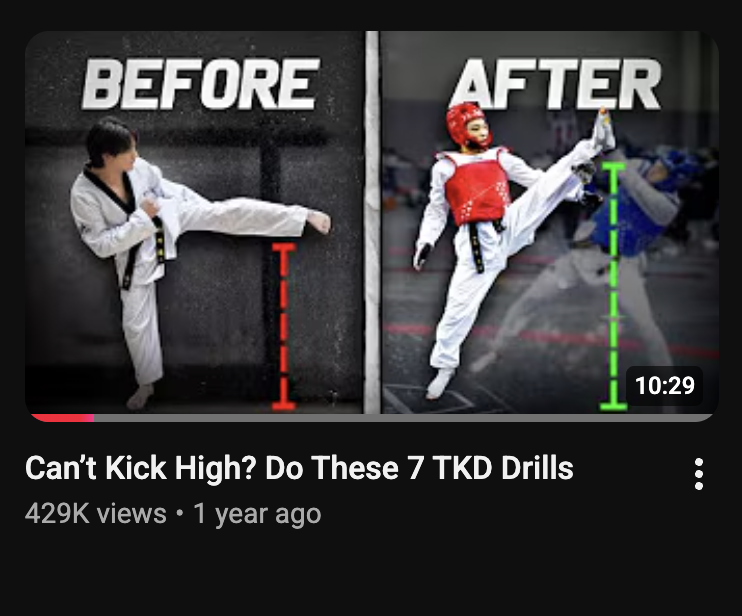
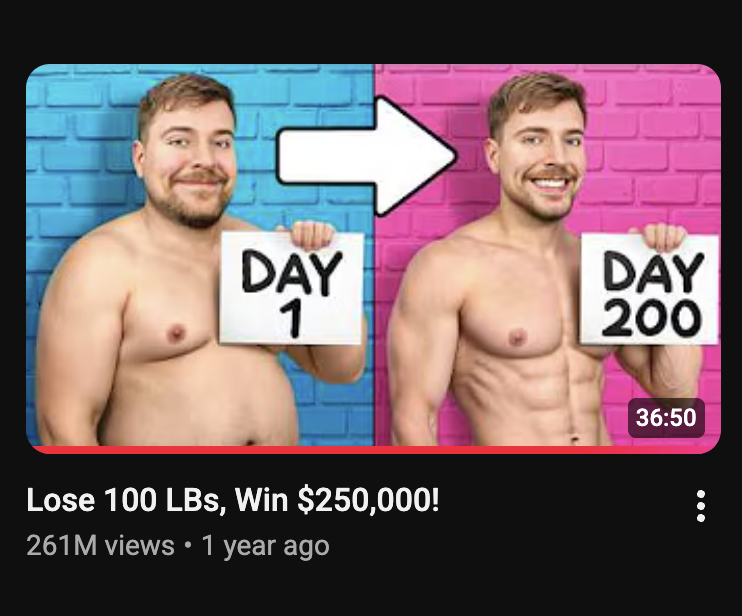
Show the before and after
If your video documents a change, the transformation thumbnail is the most reliable format available. One image that says: here's where you are, here's where you could be.
It works in almost every niche. A body transformation. An account balance climbing. A subscriber count jumping. A messy desk next to an organized one. Day 1 next to Day 30.
Make the before relatable and the after aspirational, then add an arrow or a label so the direction of change is unmistakable at a glance.
Source: @taekwondofury

Source: @aliabdaal
Source: @MrBeast
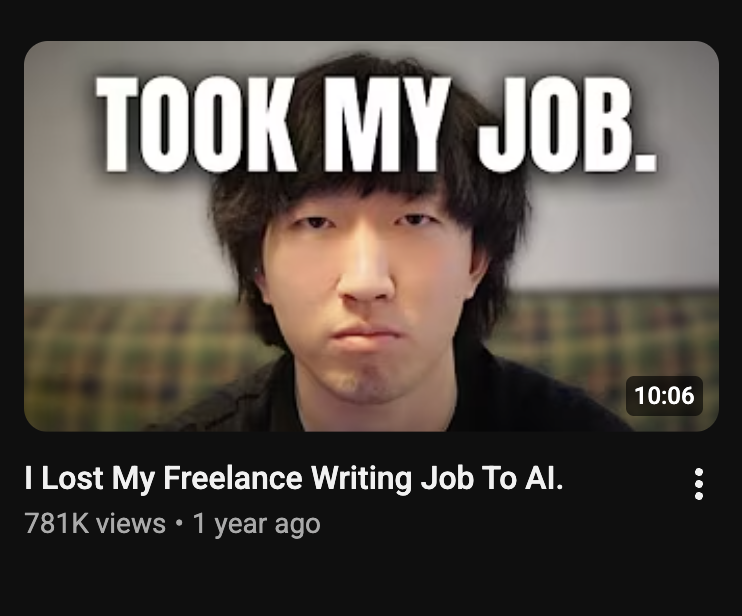
Call-out emotions
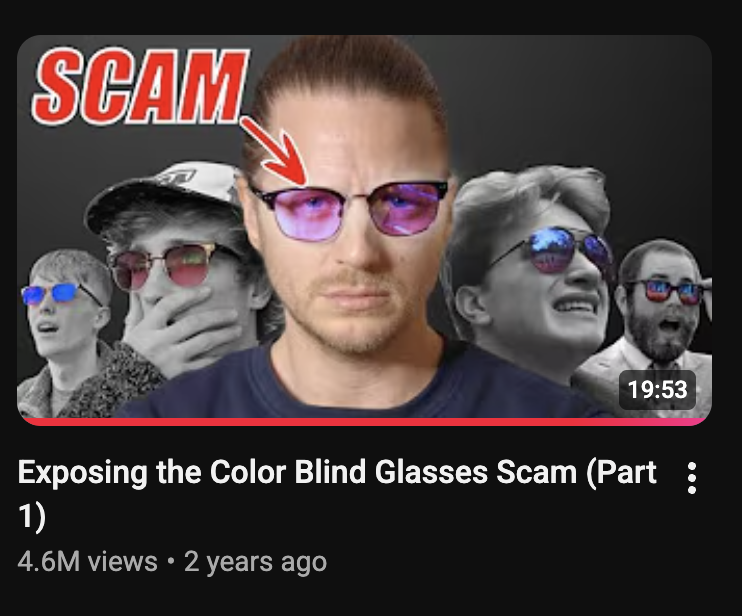
On the emotion side, five feelings stop the scroll reliably: fear, anger, sadness, disgust, and joy. Trigger one of them honestly and the click usually follows.
Source: @official_awei
Source: @MegaLag

Source: @MarkRober

Source: @biaheza
Design
Three elements, maximum
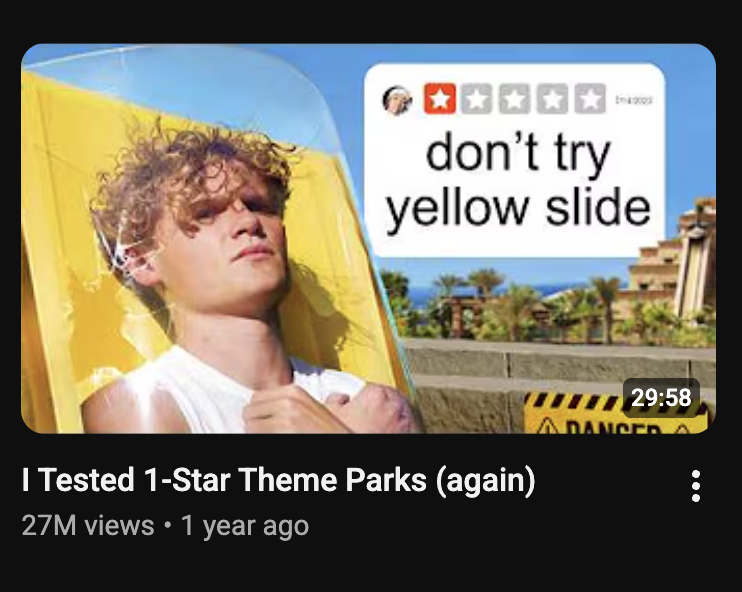
Back to that quarter of a second. In that window, the brain can take in about three things. Past three, the image reads as noise.
The three slots usually break down like this: a person with a readable expression, the main subject (a graph, an object, a screen), and one short piece of text or a number.
Favor things the viewer's brain decodes instantly: familiar app icons, short words, public figures, known logos. If someone has to figure out your thumbnail, you've already lost them.
Everything else goes. Clean background, no extra labels, no supporting graphics added "just in case."
Source: @ryan

Source: @danmartell

Source: @marktilbury
Colors that fight for attention
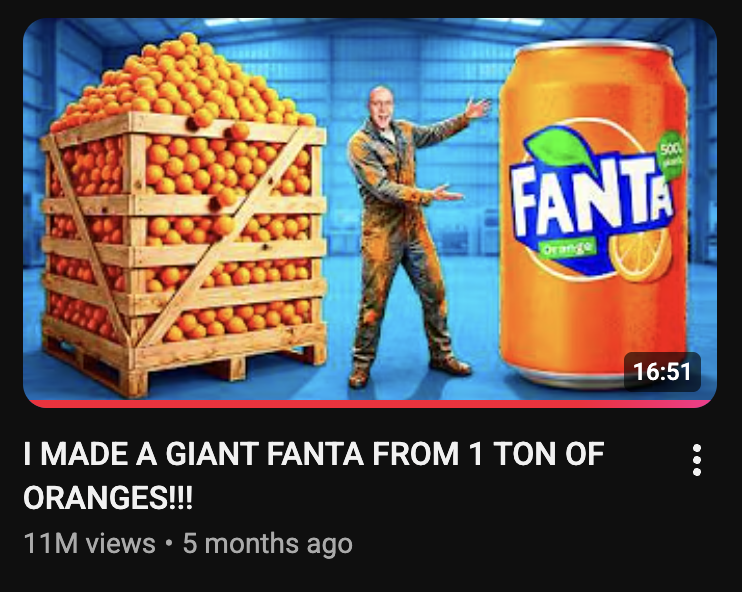
You can pick three perfect elements and still get ignored if the thumbnail blends into the homepage. Complementary colors fix that. They sit opposite each other on the color wheel. For example: blue and orange, red and green, yellow and purple, navy and gold, and together they create their own contrast.
MrBeast leans on blue and orange in almost every thumbnail, and he does it on purpose. You can be quieter about it. A person against a natural background plus one blue element already contrasts with the orange and brown tones of skin and environment.
Source: @vanzai

Source: @AlexHormozi

Source: @MrBeast
Point the eye at what matters
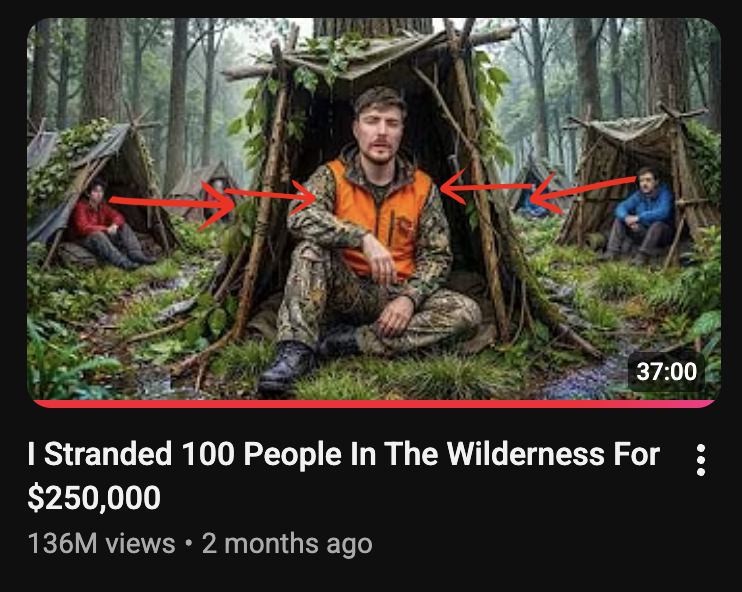
Once the thumbnail catches the eye, you still control where that eye goes. Leading lines are anything in the frame that steers the gaze: the direction a person is facing, an arrow, a road, how the text is arranged. After each draft, ask where the eye lands first. If the answer is anything other than your most important element, rearrange until it is.
Source: @MrBeast
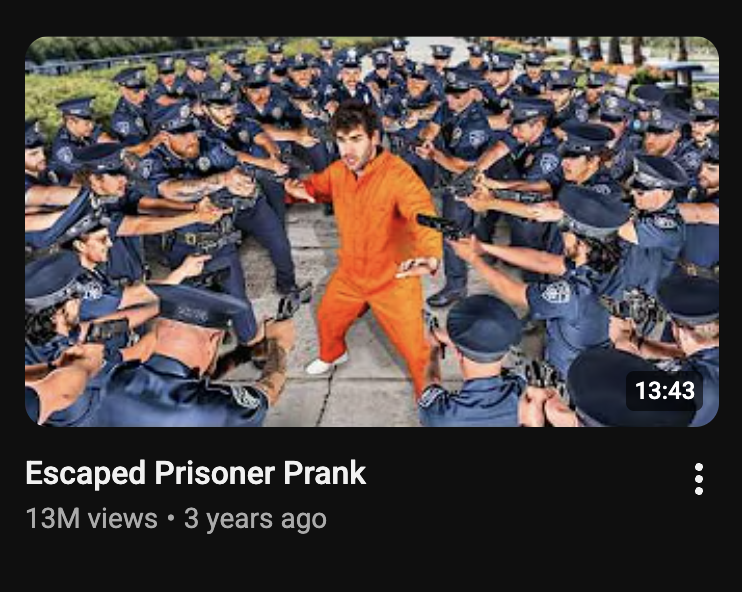
Source: @airrack

Source: @MrBeast
Where this fits
A thumbnail can only sell the click. Whether the viewer stays, subscribes, and comes back depends on the video itself. The thumbnail just opens the door — and keeps its promise. If your videos are good and your views don't reflect it, thumbnails are the first place we look.
Want us to look at yours? Get a free channel audit
